Are Tokyo Food Tours Worth It? Tastings, Value & Alternatives
Compare Tokyo food tours by neighbourhood, inclusions, dietary fit and cancellation terms, with published prices and useful self-guided alternatives.
Choose a small area of Tokyo, walk it slowly and let the details of the day come to you.
7 articles
Compare Tokyo food tours by neighbourhood, inclusions, dietary fit and cancellation terms, with published prices and useful self-guided alternatives.
Plan an Atami day trip around art, seafood and the waterfront, with museum access, beach-season distinctions and fireworks travel advice.
Plan Tokyo meals around Tsukiji, ramen, monjayaki and sukiyaki, with official menu examples, branch details and practical advice for a first visit.
Choose Tokyo food festivals by their actual dates, cuisine and ticket rules, including Ramen Festa, Taste of Tokyo and the Thai Festival.
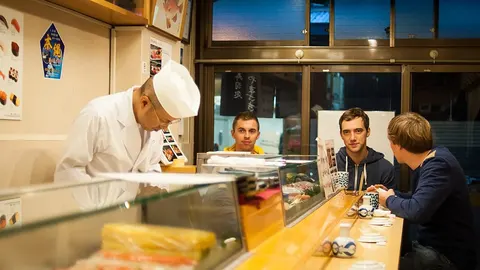
For an inexpensive Tokyo sushi meal, start with Sushiro's Yaechika branch; for a more substantial set, consider Sushi no Midori; for a traditional special occasion, look at Ginza Kyubey. The biggest budgeting mistake is using a chain's national starting price or a restaurant's cheapest lunch as though it applies to every branch, order and sitting.
Tokyo seafood does not have to mean an expensive sushi counter. Choose Takamaru Sengyoten for a substantial fish-centered meal, Isomaru Suisan for a casual late-night option, and Kani Doraku for a crab-focused restaurant experience. The most important current exception is that Kani Doraku's Shinjuku main restaurant is closed for renovation; another branch is not merely a backup name but a different booking.
Ginza is not only a district for expensive sushi. For a satisfying meal, compare Hanayama Udon's wide noodles, Bairin's pork cutlets, Ippoh's tempura and Kyubey's sushi by the time and budget you want to commit. The biggest practical divide is between walk-in restaurants with queues and reserved meals with service charges - not simply "cheap" and "luxury."