For an inexpensive Tokyo sushi meal, start with Sushiro's Yaechika branch; for a more substantial set, consider Sushi no Midori; for a traditional special occasion, look at Ginza Kyubey. The biggest budgeting mistake is using a chain's national starting price or a restaurant's cheapest lunch as though it applies to every branch, order and sitting.
These are recommendations for different needs, not a claim that three restaurants settle Tokyo's best-sushi debate. Their published menus and booking arrangements make them useful choices for travelers who need to decide where to eat, what to spend and how much of a day to set aside.
Sushiro Yaechika: a clear starting point near Tokyo Station
The official Yaechika branch page lists plates from ¥150 including tax. That is the relevant starting price for this Tokyo Station-area restaurant, even when a national advertisement for the chain mentions a lower figure elsewhere. The branch is in the Yaesu underground shopping area, not on a railway platform or inside a ticketed train concourse. [1]
Use the branch's actual menu rather than memorizing a generic "cheap sushi" price. Ten base-price plates would total ¥1,500; ten plates containing premium items could cost substantially more. The first figure is a calculated example, not an all-you-can-eat deal, and the number of pieces per plate varies.
The mall's tenant information confirms a broad menu with sides and sweets as well as sushi, plus card and selected QR-code payments. It lists weekday opening from 11am and weekend or holiday opening from 10:30am, with the last order at 10:15pm. [2]
That makes this a useful low-commitment option when you are already near Tokyo Station. It is not a reason to leave a comfortable neighborhood restaurant and make a special cross-city journey. The saving works best when the location also saves you time.
Start with a small spread of the fish or preparations you most want to try. Then add a few contrasting pieces instead of repeatedly ordering whatever arrived first. For families or mixed groups, the flexibility is often more valuable than chasing the absolute lowest possible total.
Sushi no Midori: a set meal without luxury-counter pricing
Sushi no Midori's published grand menu offers several clearly priced sets. Examples include an upper-grade nigiri set at ¥1,980 including tax, a special-grade set at ¥2,860 and a larger premium selection at ¥3,630. The website warns that some prices vary by branch, so use these as menu references and confirm the selection at your chosen restaurant. [3]
The appeal is a more complete order. You can compare a defined selection and its accompaniments before sitting down, rather than construct a meal from many individual prices. It also provides a sensible middle ground for someone who wants a substantial sushi lunch but does not need a private chef-led evening.
The Ginza branch has an important operational detail: its official page says walk-in queue tickets are issued at the entrance, with collection beginning at 10am. It currently does not accept smartphone joining of that walk-in queue. Online reservations are a separate route, not a guarantee that arriving without one means immediate seating. [4]
On weekdays, the published schedule includes a closure between 3pm and 5pm; weekends and holidays operate continuously through that period. That matters when you deliberately plan a late lunch to avoid the usual rush. A quiet-looking mid-afternoon slot may actually be outside service.
Make this meal the flexible part of your day. Browse nearby before or after it, rather than putting a non-refundable timed attraction immediately behind an uncertain queue. A worthwhile set loses its advantage when you are watching the clock instead of enjoying it.
Choose the set for the ingredients you want, not merely because its English translation sounds more prestigious. A less expensive selection you will finish happily is better value than a larger one dominated by seafood you do not enjoy.
Ginza Kyubey: the special-occasion choice
Kyubey's official Ginza menu gives a useful lunch entry point: the Oribe selection is ¥8,250, with ten sushi, rolls and soup. The Karatsu lunch is ¥11,000, while more elaborate selections rise considerably beyond that. This is a different spending category from casual conveyor-style dining, but the published lunch menu makes the first step clear. [5]
The same page states that dinner attracts a 10% service charge. For example, a listed ¥16,500 dinner selection becomes ¥18,150 before drinks when that charge is applied. Private-room arrangements have their own fee conditions, so a lunch headline should not be treated as the cost of every possible reservation.
Kyubey's Ginza branch lists Sunday and Monday closures, plus a year-end break. Its cancellation terms also distinguish lunch and dinner. These details make advance planning worthwhile: a luxury restaurant is not automatically open on the evening that happens to suit your itinerary. [5]
Reserve through the restaurant's stated route or a hotel concierge rather than assuming an expensive third-party booking service is necessary. Ask which selection and seating your confirmation covers. The purpose of spending more should be a meal you specifically want, not the satisfaction of obtaining a difficult reservation at any cost.
Give the sitting room to breathe. A counter meal deserves more attention than a hurried refueling stop, and a late arrival is particularly awkward when the service is built around a sequence. Keep the preceding activity nearby and uncomplicated.
Comparing the real cost of three different experiences
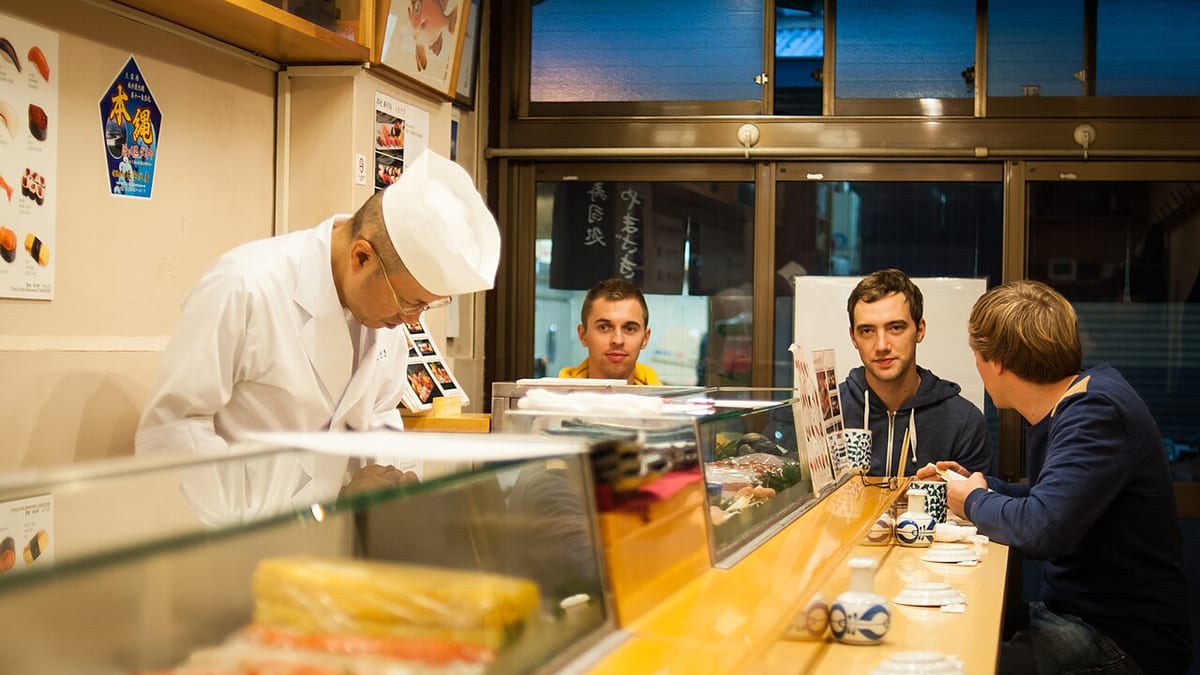
A useful budget comparison starts with format. At Sushiro, you control the number and price of individual plates. At Midori, a set anchors the meal. At Kyubey, the service, setting and chosen course are part of the purchase.
That also explains why price per piece is an incomplete measure. It ignores portion size, accompaniments, preparation and the kind of interaction you are paying for. Use piece counts to understand an order, not to declare one restaurant objectively superior.
For a solo traveler, an adjustable plate order can be ideal after a large breakfast. For a couple planning their main meal of the day, a set may be easier to budget. For someone genuinely interested in a traditional counter experience, a reserved lunch can be a more deliberate introduction than an extravagant dinner selected mainly for its reputation.
There is no requirement to spend heavily to enjoy sushi in Tokyo. The strongest plan is to choose one meal that matches your curiosity and circumstances, understand its full price, and leave enough time to eat it properly. A well-chosen ¥1,500 order can be more satisfying than a rushed premium booking you never really wanted.
Source and editor notes
Recommendations compare formats and published terms, not firsthand tasting. The useful distinctions are Yaechika's ¥150 branch price, Midori's in-person walk-in queue and Kyubey's dinner service charge. Midori's general menu explicitly allows branch variation. Menu and operating details checked 27 October 2026.