For the best taiyaki in Tokyo, choose among three well-documented specialists: Naniwaya Sohonten in Azabu-Juban, Wakaba near Yotsuya and Yanagiya in Ningyocho. Each offers a useful introduction to the classic sweet. The most important practical difference is not a supposed universal ranking: it is whether the shop is open when your route reaches it. [1] [2] [3]
That matters particularly at Yanagiya, whose current operator notice lists both Sunday and Monday closures. Older visitor information can miss the Monday closure, turning an otherwise sensible food walk into a wasted journey. [3]
What to order for a first taste
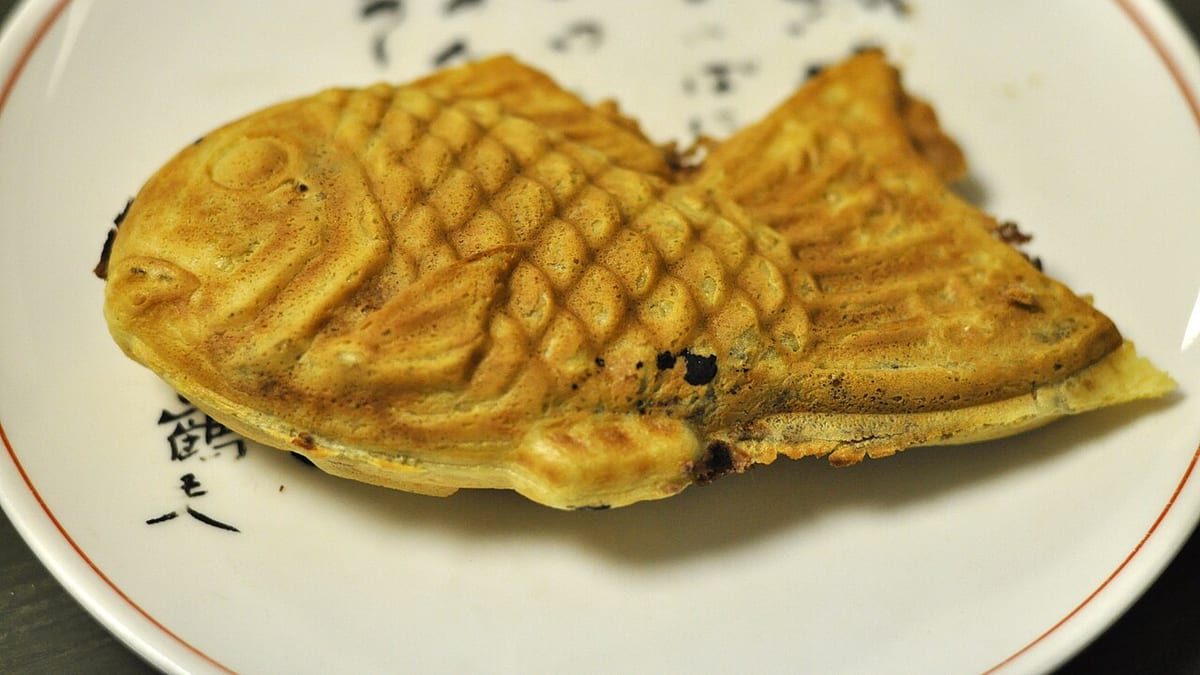
Taiyaki are fish-shaped sweets, not fish-filled snacks. These traditional specialists centre their identity on a baked outer shell and sweet red-bean filling. Yanagiya explicitly offers only chunky red-bean paste, while Naniwaya's neighbourhood listing describes its thin, crisp shell and bean filling. [1] [3]
For a useful first comparison, order the standard version and eat it soon after purchase. Begin with one rather than buying a box simply because the queue makes a larger order feel efficient. You may find that one warm taiyaki is enough between meals.
Ask where you may stand or sit while eating. Do not assume a small counter has a customer seating area, and do not block the shop entrance while photographing your purchase. Those are straightforward ways to make a popular food stop easier for everyone.
The recommendations here are based on operators' information, established specialisation and neighbourhood fit. They are not presented as firsthand tasting notes or proof that one shop is objectively superior.
Naniwaya Sohonten: combine taiyaki with Azabu-Juban
Naniwaya Sohonten is at 1-8-14 Azabu-Juban in Minato. The local shopping-street association records its establishment in 1909 and describes a traditional thin-shell style. It also lists an upstairs café and dishes beyond taiyaki, including sweet soups and other refreshments. [1]
Choose it when you want the sweet stop to belong to a broader neighbourhood visit. The possibility of a café changes the decision: you are not necessarily committing to eating while standing outside a takeaway counter.
Do not assume the shop and café run identical hours. The association currently lists the shop at 11am–7pm and the second-floor café at 10:30am–6pm. It gives Tuesday as the regular closure, with an additional third-Wednesday closure. [1]
A late-afternoon visitor should therefore decide whether the priority is buying taiyaki or having a seated break. Arriving before the shop closes does not automatically leave time for the café experience.
For a couple or family, sharing one taiyaki before deciding on other sweets is a sensible approach. A larger café order may suit bad weather or tired feet; a simple purchase makes more sense when you still have a full meal planned.
The shop's long history is part of its appeal, but age alone does not settle a taste contest. Choose it for the combination of a documented traditional style and a neighbourhood you genuinely want to explore.
Wakaba: a focused stop near Yotsuya
Wakaba's own website places it around a five-minute walk from Yotsuya Station and describes a deliberately focused operation. Its published information says payment is cash-only, reservations are suspended and fresh taiyaki are not shipped. [2]
Those details make it a straightforward in-person purchase rather than something to arrange casually through a hotel or delivery service. Bring cash and allow flexibility; a small independent shop cannot necessarily accommodate the exact collection time that suits a sightseeing schedule.
There is also a useful distinction between starting work and having food ready. The operator says baking starts at 9am, with the first taiyaki expected around 9:15am. Turning up at the beginning of production is not the same as finding a tray immediately available. [2]
Treat those times as the shop's published preparation guidance, not a guaranteed waiting-time estimate. The sensible plan is to avoid placing a non-refundable appointment immediately after a stop where you have not yet bought your food.
Wakaba is a good fit for visitors who want one classic item rather than an extensive dessert menu. Buy a small quantity, eat it nearby where appropriate and continue with the day. For a gift, ask about packaging and how the recipient should handle the purchase instead of assuming a warm snack and a boxed souvenir are interchangeable.
Yanagiya: clear current prices, but a closure worth noticing
Yanagiya's own October 2026 information lists taiyaki at ¥200 each, including tax. It allows single-item purchases and offers only chunky red-bean filling. The shop is at 2-11-3 Nihonbashi Ningyocho, with access from Ningyocho and Suitengumae stations. [3]
This makes it particularly easy to try the traditional product without committing to a selection box. For two people, two individual taiyaki total ¥400 using the published unit price; that is a calculated example, not a separate promotional offer.
Packaging is a separate consideration. The operator publishes boxed combinations whose total exceeds the individual-item calculation, so do not assume a gift box is free. Ask for the price of the complete packaged order before paying. [3]
The current operator page lists opening hours of 12:30pm–6pm and closures on Sunday and Monday. A tourism-association entry carries different closure information, which is why the dated shop notice is the stronger planning source here. [3] [4]
Do not schedule Yanagiya as an early breakfast stop. It fits better into an afternoon walk, with another café or activity available nearby if you arrive before service.
The shop describes telephone orders but also warns that capacity can affect acceptance. For a small personal purchase, planning to visit during service is simpler than assuming a reservation will remove every uncertainty.
One shop is enough for most visitors
A three-shop comparison is worthwhile only when comparing taiyaki is itself the point of your day. Otherwise, the journeys and extra food can outweigh the difference between the sweets.
Choose Naniwaya for Azabu-Juban and the possibility of a café break, Wakaba for a focused cash purchase near Yotsuya, or Yanagiya for a clearly priced afternoon stop in Ningyocho. Match the opening pattern to your itinerary first.
Finally, keep fresh-counter prices separate from online gift or frozen-delivery prices. Packaging, shipping and product format can change the total. The fairest comparison is the same kind of item bought under the same conditions - and, for a first taste, that usually means one freshly purchased taiyaki.
Source and editor notes
Selection is based on operators and local shop information, not personal tasting. Yanagiya's October 2026 notice supersedes older closure details. Wakaba's operator information was available through indexed text, although direct page retrieval timed out; no full current timetable is asserted for that shop.