The JR Tokyo Wide Pass is worth considering when you will make several relatively expensive covered journeys within three consecutive days. It is usually a poor starting point for sightseeing only inside Tokyo. At ¥16,000 per adult, buy it after comparing your actual routes and dates - not because a destination appears somewhere near Tokyo on a map. 1
The pass can make a compact regional itinerary easier to budget, but its value depends on more than distance. The railway, train type, start date and seat availability all matter. A trip described as "Nikko by train," for example, can follow routes with different coverage.
First establish whether you can use it
The adult price applies from age 12; children aged 6–11 pay ¥8,000. The validity period is three consecutive days, not three days selected from a longer holiday and not a rolling 72-hour period. 1
A Monday start therefore uses Monday, Tuesday and Wednesday. Starting late on Monday does not create validity until late on Thursday. For travellers arriving in the evening, this can be a decisive reason to keep the airport journey separate and start the pass when the regional travel begins.
Eligibility is based on holding a non-Japanese passport. Unlike some other visitor rail products, the Tokyo Wide Pass does not require Temporary Visitor status, so qualifying foreign residents can also use it. The original passport is needed for purchase or collection; a photocopy is insufficient. 2
Keep that passport with you while travelling on the pass. It is personal and cannot be passed to a partner or family member for a day when you are staying in the city. 3
Add up journeys you genuinely intend to make
Make a three-day plan before doing the arithmetic. Include each covered rail journey at the fare and seat class you would otherwise buy. Exclude trips added solely to create an impressive-looking saving.
JR East gives an illustrative itinerary combining GALA Yuzawa and Nikko, using ordinary reserved seats, at approximately ¥21,500 in a regular period. Against the ¥16,000 pass, the arithmetic is an approximate ¥5,500 saving. The example is conditional on the stated route and season, not a universal price for two independent return excursions. 1
Use that example to understand the method, not as a ready-made recommendation. GALA Yuzawa is a seasonal station, and a ski-focused journey is irrelevant to a visitor travelling for gardens or summer sightseeing.
For your own comparison, write down the total without the pass, then subtract the pass price and any supplements still payable. A useful saving should remain after that calculation. If the difference is small, the freedom to change your itinerary may matter more than buying unlimited travel in advance.
Three patterns that lead to different decisions
Two substantial regional trips close together: this is the strongest kind of candidate. Compare the reserved-seat fares for both excursions and any useful covered travel on the third day. Buy only when the itinerary itself makes sense and the trains you need are available.
One regional trip surrounded by city sightseeing: do not assume the pass wins. Price the excursion separately, then add the local journeys you actually expect to make. The opportunity to ride additional trains has little financial value when you would rather spend that time in a museum or neighbourhood.
An arrival journey plus a regional overnight stay: examine the dates carefully. This can be efficient when the three calendar days line up naturally. It can also waste the first day if you activate after a late arrival and your expensive return falls outside the validity period.
These are decision patterns, not quoted packages. The right result may be different for two travellers taking the same holiday but using different airports, hotels or departure times.
The route exclusions that most often change the answer
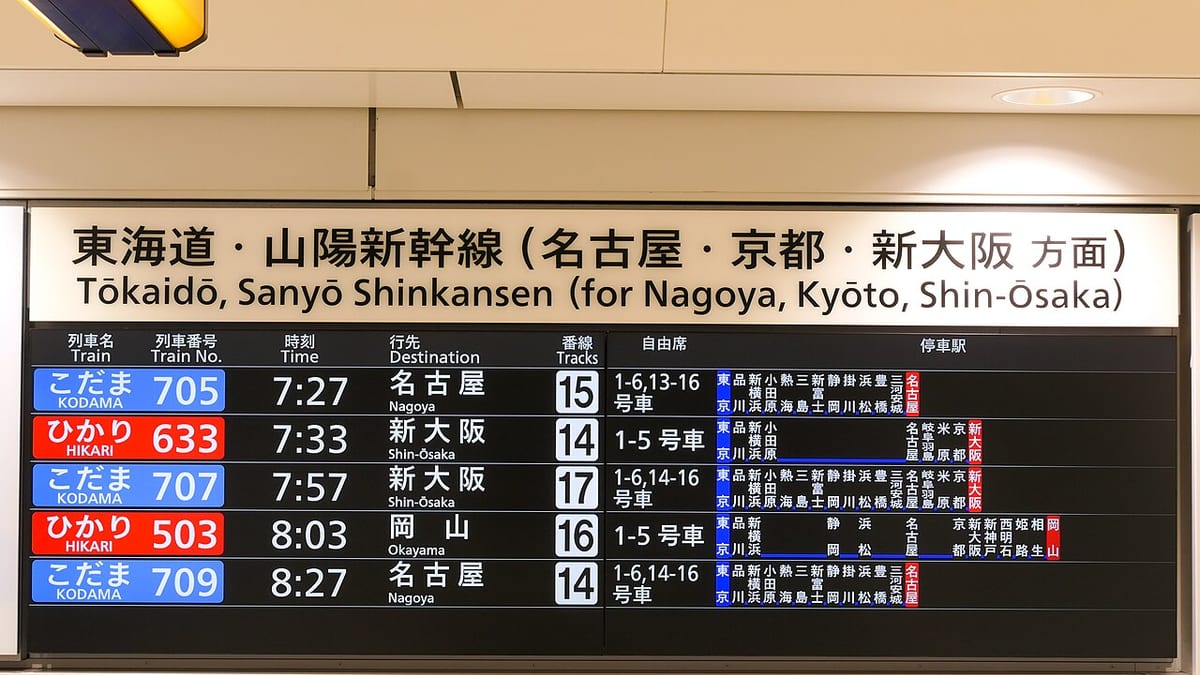
The Tokyo Wide Pass is not valid on the Tokaido Shinkansen. Do not assume that seeing a destination such as Atami on a regional map means every train to that destination is included. The line and service matter, not just the station name. 3
Nikko needs similar care. The pass covers specified through limited expresses operating between JR East and Tobu, under conditions that require a JR endpoint. It is not a blanket pass for Tobu limited expresses starting from Tobu's own Tokyo terminals. 1
On Fujikyu Railway, particular premium trains or reserved seating require additional fees. The operator specifically identifies Fujisan Express, Fujisan View Express and Fuji Tozan Densha supplements. Check the actual service rather than applying the slogan "Fuji trains included" to every product. 3
There are geographic limits too. JR East's FAQ explains that a traveller continuing beyond the covered area towards Nagano must buy the additional section; there is no need to get off solely to cross the boundary once the necessary ticket has been arranged. 4
These exceptions do not make the pass bad value. They make a route-specific comparison essential.
Reserve the important trains before building the day around them
The pass does not guarantee a seat. Certain services require a reservation, and popular departures may not have the availability you want. Use the official reservation process and obtain the relevant seat ticket rather than assuming that possession of the pass resolves everything at the platform. 3
For a day trip, secure a workable return as well as the outward journey. An early train is not particularly useful if the only acceptable return leaves before you can do what you travelled to see.
JR East's reservation system generally opens sales one month before travel. The official FAQ also distinguishes online reservation limits from the ability to make further bookings after collecting tickets, so an error message is not necessarily evidence that a train is sold out. 4
Do not hold overlapping reservations for alternatives you cannot all use. Choose the itinerary, cancel unwanted bookings through the appropriate process and leave enough time for transfers.
Separate collection from the first train departure
Buying online does not remove every station task. JR East requires collection of the pass in Japan, with designated passport-reader machines and service centres available. Choose a collection point that fits your arrival and carry the original passport. 2
I would collect before the morning of an important excursion whenever practical. That is a planning recommendation, not a claim about typical queues. It avoids combining unfamiliar ticket collection, station navigation and a fixed train departure into the same short window.
Also understand the change and refund rules before committing. They differ according to purchase channel and whether the pass has already been collected or used. A spare day that you decide not to travel does not automatically become refundable value. 2
The pass is a tool for a coherent regional itinerary. Buy it when the covered journeys you already want exceed its cost by a worthwhile margin; use individual tickets when flexibility or a slower Tokyo stay matters more.