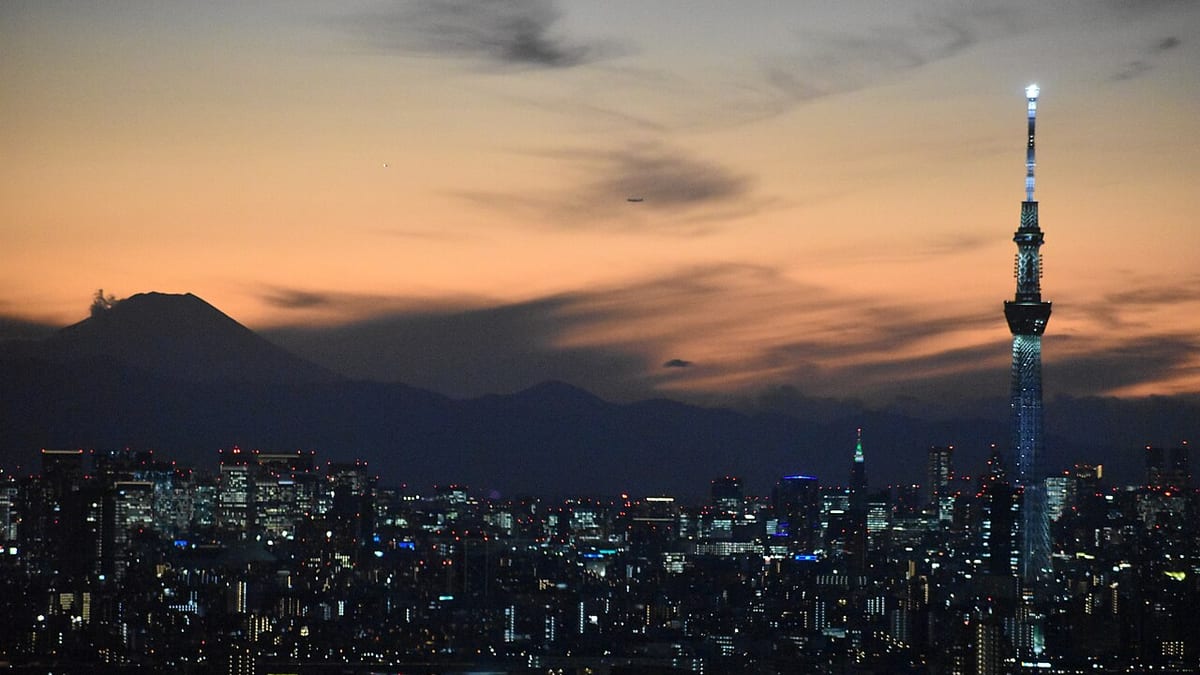
A Tokyo sunset cruise is worth it when the sailing overlaps sunset and you want the bay journey itself, not just an elevated city view. You do not necessarily need a meal package: Symphony sells boarding-only tickets as well as restaurant plans. Check the season, departure pier and seat conditions before deciding how much to spend.
The most useful question is not simply whether a cruise is romantic. It is whether you want a two-hour outing, a restaurant meal, a particular photograph or transport to another neighbourhood. Those goals lead to different tickets, and sometimes to different boats altogether.
"Sunset" is a product name, not a seasonal guarantee
Symphony's standard sunset sailing is advertised from 16:20 to 18:20, with an operational variation to 16:30–18:30 possible. The time printed on the final confirmation should govern your arrival plan. [1]
That schedule overlaps sunset comfortably in the darker part of the year. The National Astronomical Observatory of Japan gives Tokyo's sunset on 16 November 2026 as 16:34. On the standard sailing, that is just 14 minutes after departure, so someone primarily interested in the light should be ready early rather than waiting until the meal is well underway. [2]
Summer is different. The observatory records sunset on 21 June 2026 at 19:00. Using the standard 16:20–18:20 sailing as a comparison, the boat would finish 40 minutes before sunset. This is a historical seasonal illustration, not a claim about a particular future summer departure or special schedule. [3]
The lesson is to compare your date's sunset with the actual cruise times. Do not assume the same named product delivers the same light in November and June. Nor does a calculated sunset promise clear weather or a visible sun from your position on the vessel.
For photography, decide whether you want changing daylight, the moment of sunset or an illuminated skyline. The first can be enjoyable even on a cloudy day. The second is much more sensitive to timing and conditions. The third may suit an evening sailing better than the product labelled sunset.
Boarding only can be the most sensible ticket
The current Symphony sunset page lists adult boarding-only tickets at JPY 3,600, an Italian meal plan at JPY 11,000 on weekdays and JPY 12,000 on weekends and holidays, and a premium beef plan with a guaranteed window position at JPY 18,000 and JPY 19,000 respectively. Ordinary plans do not guarantee a selected seat. [1]
For two adults on a weekday, boarding only costs a calculated JPY 7,200; the Italian plan costs JPY 22,000. The JPY 14,800 difference is substantial enough to ask whether the meal is central to the outing or merely the package you first found online.
Choose boarding only when you would rather focus on the changing view and eat elsewhere. The operator says those passengers can use the lounge and top deck, with refreshments available to purchase; bringing your own food and drink is not permitted. [1]
Choose the restaurant plan when a seated meal is part of the occasion. The purchase then includes the structure of the evening, not simply access to the water. Compare the menu with your preferences instead of treating every higher-priced plan as a universally better experience.
A guaranteed window is another distinct purchase. Someone who intends to spend much of the sailing outside may value it less than someone who wants to remain at the table. Clarify the exact promise in the named plan rather than requesting a window in a comment box and assuming the request is binding.
Reach the correct pier with time to board
Symphony boards at Hinode Pier. Its access information places the terminal approximately one minute on foot from Yurikamome Hinode Station and twelve minutes from the south exit of JR Hamamatsucho. The operator asks passengers to arrive 30 minutes before sailing. [4]
Treat that as arrival at the operator's boarding location, not the moment your train enters a nearby station. The sunset plan separately asks for boarding procedures to be completed at least 15 minutes before departure. These instructions describe different stages, rather than two competing suggestions about when to arrive. [1]
For the standard 16:20 departure, aim to reach the terminal around 15:50. That is a direct calculation from the operator's reporting instruction. Allow the journey to the pier in addition, including the walk from the relevant station exit and time to locate the correct desk.
This is an outing I would pair with a deliberately light preceding afternoon. A restaurant cruise is not a train you can simply replace with the next service if sightseeing runs late. Keep the confirmation accessible and settle menu, seating or mobility questions before the departure day.
Symphony's separate dinner cruise is advertised from 19:00 to 21:30 and excludes children below primary-school age. That restriction should not be transferred automatically to every sunset package; confirm eligibility for the exact plan when booking with children. [5]
A water bus is an alternative, but not the same journey
Tokyo Mizube Line offers a different proposition: a useful trip between waterfront districts rather than a restaurant circuit. Its operator lists an adult one-way fare of JPY 2,000 between Asakusa Nitemmon and Odaiba. The service resumed on 17 October 2026 after its suspension. [6][7]
This can be a good choice when you already want to finish the day in Odaiba. It is less obviously cheaper when your aim is simply a round trip: two JPY 2,000 legs total JPY 4,000, more than Symphony's JPY 3,600 boarding-only example. That comparison concerns ticket arithmetic, not an assertion that the journeys are interchangeable. [1][6]
A one-way boat plus a different return route may make more sense. Build the cruise into a day's movement rather than buying water transport and then retracing it solely to get back to your starting point.
Check the operator and pier carefully. Mizube's Asakusa Nitemmon stop should not be confused with another company's Asakusa departure simply because both sell river journeys. The official service page publishes dated sailing information and warns that weather and water conditions can affect operation; open-deck access can also be restricted. [8]
Consequently, do not plan on an undated photograph or a generic "boats run until evening" claim. Use the actual service for your travel day, particularly when your reason for boarding is the light rather than transport alone.
Who should spend more, and who should skip it?
Spend more when the group genuinely wants a meal aboard, a particular seating guarantee or an organised celebration. Spend less when the bay perspective is the main attraction and a boarding-only ticket gives you that experience without an unwanted restaurant package.
Skip the cruise when a fixed departure will make the day stressful, when the schedule misses the light you care about, or when remaining ashore better suits the group. A cruise is not automatically an essential Tokyo experience simply because it combines several familiar sights in its advertising.
The best-value version is the one that gives you time on the water for a clear reason. Match the departure to the season, separate the meal from the view in your budget, and use the final booking conditions to decide what is genuinely included.
Sources
- Symphony: sunset cruise plans and boarding-only tickets
- National Astronomical Observatory of Japan: Tokyo, November 2026
- National Astronomical Observatory of Japan: Tokyo, June 2026
- Symphony: boarding location and arrival guidance
- Symphony: dinner cruise conditions
- Tokyo Mizube Line: fares and frequently asked questions
- Tokyo Metropolitan Government: Mizube Line reopening announcement
- Tokyo Mizube Line: current service and dated schedules