Tokyo Spring Festival is a classical-music festival with concerts across multiple venues, not a general cherry-blossom fair. Its announced 2027 window is 19 March–17 April, subject to confirmation. The biggest planning change is Tokyo Bunka Kaikan's renovation closure: do not assume the concert you choose will take place beside Ueno Station. [1][2]
What is confirmed for 2027?
The organiser's April announcement gives 19 March to 17 April 2027 and names both Ueno cultural institutions and concert halls elsewhere in Tokyo. The notice explicitly describes the dates as tentative. That is enough to identify a broad travel period, but not enough to book a particular artist or performance. [1]
A later announcement schedules the full programme release for 29 October 2026 at 5 p.m. Japan Standard Time. This article is published on 28 October, so that release is still in the future. The organiser says the edition will mark the two-hundredth anniversary of Beethoven's death and expand across additional venues. Specific artists, performance dates and ticket prices should come from the released programme, not from assumptions based on previous years. [3]
For a music-led trip, the sensible sequence is programme first, concert choice second, accommodation and travel third. A flexible hotel reservation can hold an option, but avoid non-refundable arrangements whose only justification is an unannounced performance.
For someone already visiting Tokyo in that period, the approach is simpler: identify the days you are free and choose a concert that fits. You do not need to turn the entire holiday into a festival itinerary to enjoy one excellent afternoon or evening.
The Bunka Kaikan closure changes the map
Tokyo Bunka Kaikan closed for major renovation from 7 May 2026, with the smaller recital hall closing from 14 May. The venue says the overall closure will extend into the Japanese fiscal year of 2028, with the exact completion period still to be confirmed. It is not an operating default venue for the spring 2027 festival. [2]
The festival's preliminary venue list includes the Former Tokyo Music School Sogakudo and several museums in Ueno, alongside Tokyo Metropolitan Theatre, TOPPAN Hall, Nippon Steel Kioi Hall, Hama Rikyu Asahi Hall and other spaces. The important consequence is geographical: a festival ticket does not automatically mean a concert inside Ueno Park. [1]
Do not confuse Tokyo Bunka Kaikan with Tokyo Metropolitan Theatre. Similar-sounding English descriptions of public cultural institutions can obscure the fact that they are different destinations. Use the venue name and address on the individual concert page, then save that location in your route planner.
If you plan to attend several performances, group them by area. An afternoon museum concert in Ueno followed by dinner nearby is straightforward in concept. Adding an evening concert elsewhere requires an actual transfer calculation, including walking through the first venue and finding the next entrance - not merely comparing the two advertised start times.
Accommodation near Ueno may still suit a programme concentrated there. It is not automatically the best base for a personally selected series of concerts spread across the city.
Choose the musical format that suits your trip
Once the programme is published, look beyond the artist's name. Establish whether the event is a recital, chamber concert, orchestral programme, staged or concert opera, talk, or another format. The same composer can appear in an intimate short concert and a much longer evening with an interval.
For a newcomer, one focused recital can be more satisfying than buying a long programme purely because it looks prestigious. For an experienced listener, repertoire and performers may justify crossing the city. For a family, eligibility and duration should come before the fame of the soloist.
Read programme notes before attending, particularly when the work has a narrative or text in a language you do not understand. Check whether translations, surtitles or spoken introductions are available for that specific event. Do not assume every concert offers English interpretation merely because the festival has an English website.
Treat museum concerts as their own bookings. An event held inside a museum does not automatically include access to every exhibition, and an exhibition ticket does not necessarily admit you to the performance. Confirm the precise entrance and what the concert ticket covers.
These are decisions to make after the individual listings appear; they are not a substitute for a still-unpublished 2027 schedule.
Buy the right kind of ticket
The festival distinguishes admission tickets, for attending a concert hall, from live-streaming access, for watching through a device. This is an important distinction when navigating translated pages: an inexpensive online product is not a bargain seat in the physical auditorium. [4]
The streaming system is also changing. The organiser says new streaming-account registration stopped on 1 October 2026, existing accounts are scheduled for deletion after 14 December, and instructions for the 2027 service are expected around mid-February 2027. Those notices concern the streaming membership system; they should not be interpreted as cancellation of the live festival. [4]
For an in-person booking, start from the official concert listing and follow its admission-ticket route. Check the sale date, seat category, total charge and collection method. Overseas visitors should establish whether the payment and ticket-delivery process works with their card, phone and address before making other plans dependent on the purchase.
A programme announcement and a ticket-release date may be different events. Do not assume tickets become available at the exact moment the lineup is revealed unless the organiser explicitly says so. Likewise, a sold-out category does not establish that every seat or every performance is unavailable.
Keep a record of the confirmation and any instructions for presenting the ticket. If you require accessible seating or a companion arrangement, ask before selecting ordinary seats rather than assuming the box office can change them on arrival.
Build a realistic concert day
For a Ueno performance, leave time to find the exact museum or hall entrance. A broad park map pin is not sufficient, especially when several cultural buildings appear on the festival programme. For another venue, plan from its actual address rather than starting with "Ueno" out of habit.
Choose either a substantial museum visit or a long leisurely meal before an evening concert, not both without enough margin. Ticket collection, security and cloakroom arrangements can add steps even when the train journey itself is simple. A planning allowance of roughly thirty minutes at the venue is sensible unless the ticket asks for more; it is an editorial buffer, not a universal festival rule.
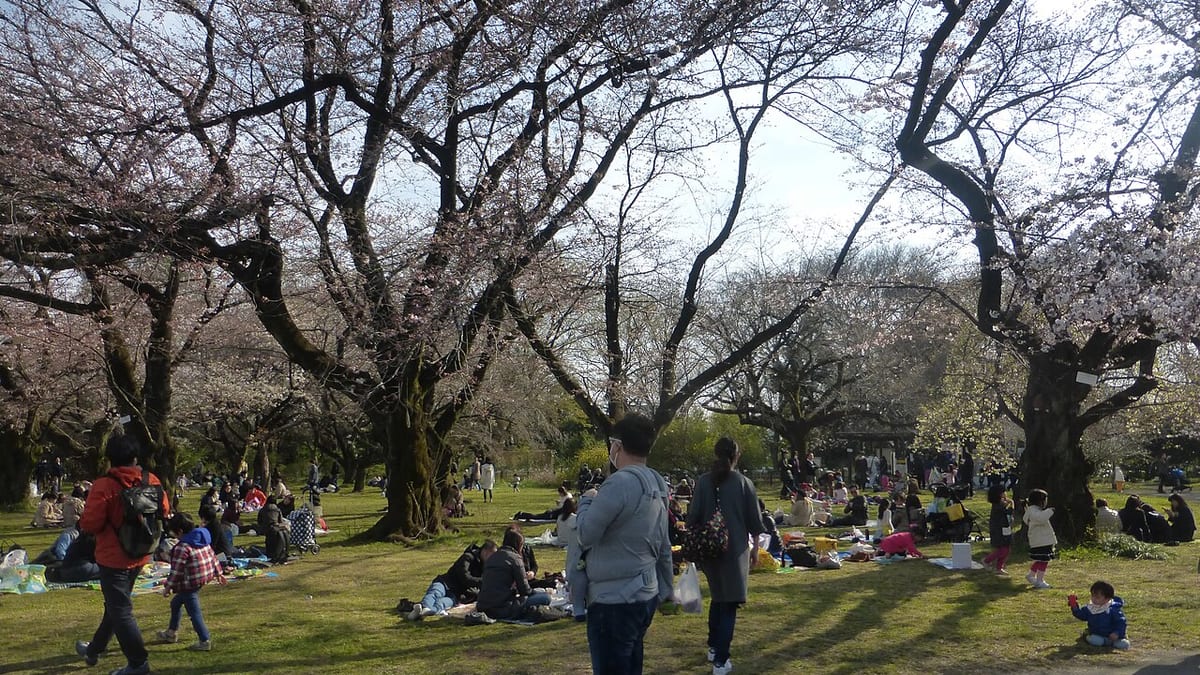
Keep the spring scenery as a welcome extra rather than a guaranteed package. Festival dates do not promise peak cherry blossoms on your chosen day. A concert can anchor the itinerary even when weather or flowering conditions make an outdoor plan less appealing.
For two concerts in one day, confirm the first event's expected finish and leave a proper meal break. Listening is more enjoyable when you are not arriving hungry, carrying cumbersome shopping bags or worrying about a tight transfer.
The 2027 edition rewards fresh planning. Its confirmed framework is useful, but the detailed programme and venue-by-venue ticket conditions should determine the final trip - not a recycled guide written when Bunka Kaikan was still open.