Tokyo Metropolitan Government Building is worth visiting for a free skyline view, especially when you are already exploring Shinjuku. Choose it for a flexible introduction to the city rather than an open-air rooftop experience. The important catch is that the north and south observatories normally close at different times, so an evening visit needs the correct tower. [1][2]
Free admission makes it easier to adapt the visit to the weather. You do not have to defend an expensive ticket purchase when visibility disappoints. That flexibility is its biggest practical advantage, particularly on a first trip when you are still deciding which parts of Tokyo deserve more time.
What the view does - and does not - offer
Both observatories are in the twin towers of Government Building No. 1, at approximately 202 metres above the ground. They are enclosed viewpoints rather than outdoor platforms. [1][2] Expect a broad city panorama through windows, not an uninterrupted open-air photography experience.
Start by looking for the districts you have visited, then move outward toward the horizon. Recognising a park or cluster of buildings makes the scale of the city easier to understand than trying to identify every distant landmark immediately.
The metropolitan government's viewing guide identifies Mount Fuji to the west and says clear views are more common in the colder December–February period. [1] That is a seasonal tendency, not a guarantee. Do not make a distant mountain sighting the sole test of whether the stop was worthwhile.
For photography, move carefully to reduce reflections and avoid using flash against the glass. Leave space for other visitors to look through the windows. The building's rules ask visitors not to use tripods or similar equipment, so plan for handheld photography rather than a fixed setup. [1]
South or north: the timing difference matters
The current official schedule gives the South Observatory hours as 9:30am–10pm, with admission ending at 9:30pm. The North Observatory normally closes at 5:30pm, with last admission at 5pm; when the south is closed, the north is scheduled to remain open until 10pm. [1]
Regular closures also differ. The south normally closes on the first and third Tuesdays, while the north closes on the second and fourth Mondays. Holiday substitutions, inspection days and year-end arrangements mean the dated official calendar is more useful than memorising a weekly rule. [1]
For a straightforward evening outing, identify the open tower before leaving your hotel. Do not arrive at the north entrance late in the evening merely because a general attraction listing says "open until 10pm."
There is no need to visit both towers just to make the experience complete. Choose the one available at the time that suits you, then spend the saved time looking properly. A second near-identical stop is less valuable than a relaxed first one.
Use the correct entrance, not just the building pin
The observation elevators leave from the first floor of Building No. 1. On weekends and holidays, the government warns that second-floor entrances are closed and directs visitors to the first-floor main entrance. [1] This is useful information when a navigation app brings you to the complex without explaining how public access works that day.
Tochomae Station is the nearby Toei Oedo Line stop. JNTO describes a basement connection, while the official tourism guide also identifies a short approach from the station. [2][3] Follow signs for the observatory rather than assuming every lift in a working government complex serves visitors.
From Shinjuku, allow time for the station exit and the walk through the western district. A station-to-building walking estimate is not the same as the time from your train platform to the observation lift.
I would allow around an hour at the complex, adding more if you want a guided explanation or an evening show. This is a planning allowance, not a promise about queues. Ordinary observatory visits do not take advance reservations, so avoid positioning one immediately before a tightly timed dinner elsewhere. [1]
A short guided visit can add more than another photograph
GO TOKYO lists volunteer-guided observation-deck tours for overseas individual travellers in English, Korean and Chinese. The advertised service is approximately 20 minutes, normally between 10am and 3pm at the South Observatory, excluding its closure days and other listed exceptions. Advance reservations are not available. [4]
That is a useful option when the view seems impressive but difficult to interpret. Ask on arrival whether a guide is available rather than making your whole itinerary depend on an immediate departure in a particular language.
The lower floors also provide reasons not to hurry straight back outside. GO TOKYO highlights the first-floor tourist information centre, regional promotional displays and a shop selling local specialities. [2] These can help you turn the panorama into a more informed plan for the rest of the trip.
Keep the distinction between browsing and an additional attraction. You need not spend an extra hour shopping to justify coming. Use the information services when they answer a real question, such as which neighbourhood to visit next.
The projection show is outside, not upstairs
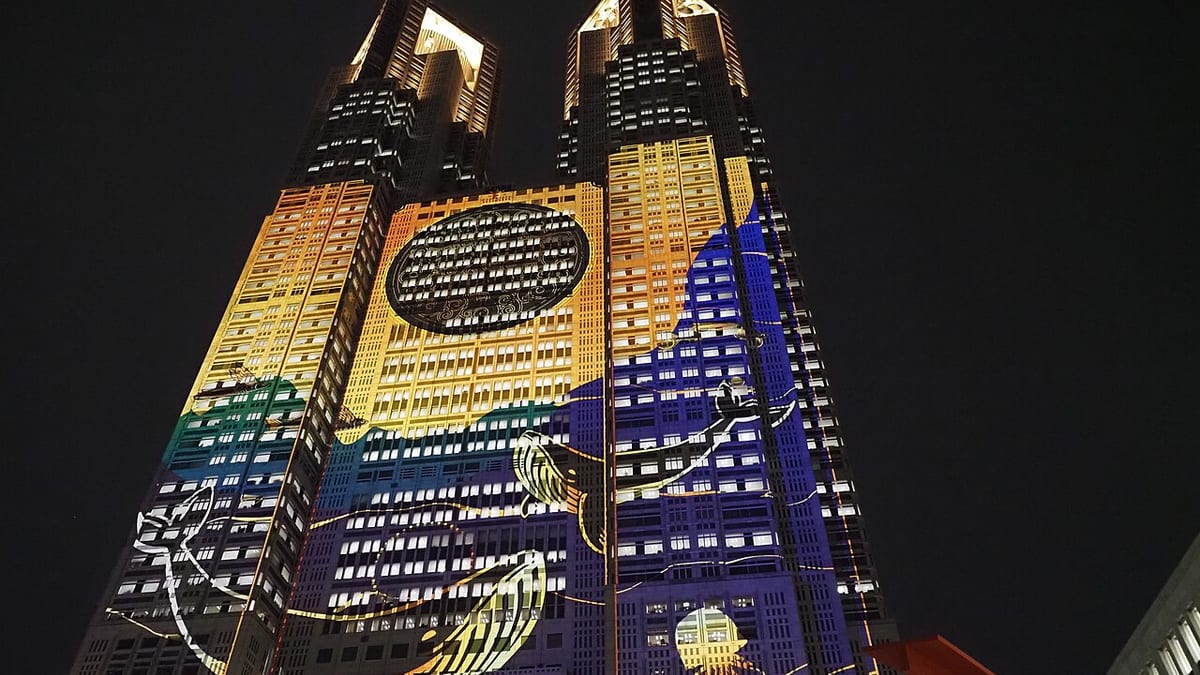
TOKYO Night & Light projects onto the east wall of Building No. 1. Its official site provides the viewing location, programme and seasonal timetable, with cancellations possible in stormy weather. [5]
Watching it is a separate ground-level activity from visiting the observatory. Do not stay upstairs expecting to watch a show projected onto the building you are inside. Plan time to descend and reach the designated viewing area.
A sensible evening sequence is the skyline first, followed by an outdoor screening when the published programme fits. Reverse the order only when the observatory's final admission still leaves enough margin. A free show should not turn the evening into a race between entrances.
Choose the building when you want an accessible-priced overview of Tokyo, a Shinjuku activity that can remain flexible and the option of combining two very different views of the same structure. Pay for another observatory when its particular setting or open-air format is what you genuinely want - not because a free viewpoint is automatically a lesser experience.