
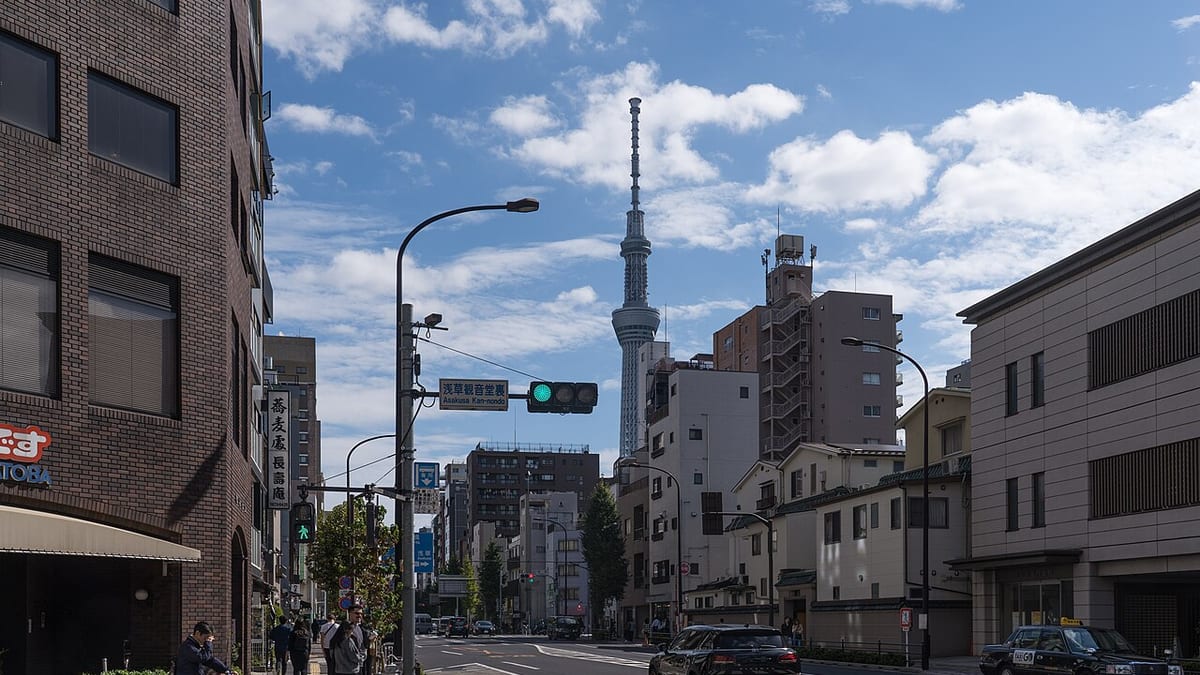
Tokyo in May is a strong choice for neighbourhood walks, gardens and a mix of indoor and outdoor sightseeing. The biggest planning decision is whether to travel during Golden Week or afterwards. Choose early May for the holiday atmosphere and accept more competition for popular bookings; choose later dates when you prefer a less holiday-driven itinerary. 1
Start with the holiday calendar, not a generic "avoid May" rule
For the next May after this guide's publication, Japan's Cabinet Office lists 3 May 2027 as Constitution Memorial Day, 4 May as Greenery Day and 5 May as Children's Day. Showa Day falls on 29 April. There is no additional national holiday on 6 May 2027 in that official list. 2
This matters because holiday dates and substitute days are often copied from one year into another. A timetable or hotel plan made for May 2026 should not be transferred unchanged to 2027. Look at your actual arrival, departure and intercity travel dates against the correct calendar.
My recommendation for a flexible first visit is to consider dates after the main holiday block, especially when you want to make day trips or book a specific popular attraction. That is a planning preference, not a promise of empty trains or a measured hotel-price discount. Tokyo remains a working city and a major visitor destination outside Golden Week.
Travelling during the holiday is not automatically a mistake. It may be the only period available to you, or the festive atmosphere may be part of the attraction. In that case, reserve the few experiences that matter most and leave ordinary neighbourhood exploration flexible rather than trying to pre-book every hour.
Do not assume that all shops and restaurants close for the entire period. Individual businesses have their own calendars. Confirm the opening of a particular venue you are travelling across town to visit, rather than treating the national holiday list as a universal closure notice.
May weather: comfortable walking, but not a dry-weather guarantee
Tokyo's 1991–2020 climate normals show a May mean temperature of 18.8°C, an average daily high of 23.6°C, an average low of 14.6°C and monthly precipitation of 139.7 millimetres. These are climate statistics, not a forecast for your dates or the highest and lowest temperatures the month can produce. 3
The practical packing choice is layers: clothes comfortable for a warmer afternoon, something light for a cooler evening and rain protection that is easy to carry. Choose footwear for the distance you will actually walk, not just for the forecast temperature.
Be careful with "average weather" figures in seasonal articles. GO TOKYO explicitly bases the weather numbers in its current May guide on 2025, a single year. That is useful historical context but not the same measure as a 30-year normal. This guide uses the meteorological agency's long-term table instead of mixing the two. 13
A flexible itinerary should include at least one indoor activity you genuinely want to do. Swapping a museum and a garden between days is easier than trying to turn every rainy hour into an emergency shopping trip. Good weather can then be used for longer walks without making the entire holiday dependent on it.
The May 2027 sumo tournament has confirmed dates
The Japan Sumo Association lists the May 2027 tournament at the Kokugikan from 9 to 23 May, with advance ticket sales beginning 10 April 2027. Those are announced dates, not a claim that tickets are already available on this article's publication date of 31 October 2026. 4
For someone interested in sumo, this is a stronger reason to choose a particular week than an undated events roundup. Decide whether attending is essential before arranging the rest of the day. A confirmed ticket should have a clear place in the itinerary rather than compete with another major timed experience.
Compare the actual seating and ticket conditions when sales open. A low headline price for a different seating category is not a useful guide to the cost of the experience you intend to book. Keep the official ticket route and any seller-specific terms together with the confirmation.
Travel plans can be made around the announced tournament period, but accommodation does not guarantee admission. Avoid paying for a supposedly included event unless the package explicitly identifies the seat, date and conditions. The official schedule establishes when the tournament takes place; it does not certify every third-party tour that mentions it.
Gardens and festivals: enjoy the season without chasing the wrong date
May's fresh greenery is a good reason to slow down in parks and garden neighbourhoods. GO TOKYO highlights the month's outdoor appeal and its traditional festivals, including Sanja Matsuri in Asakusa. A festival visit, however, is a different plan from an ordinary quiet temple morning. 1
When a procession is the reason for going, use the organiser's programme for the exact year and distinguish public events from religious preparations. This article does not assign unconfirmed 2027 dates to every annual festival. A past programme can tell you what an event is like without proving the next edition's timetable.
Rose gardens offer another seasonal focus. Jindai Botanical Gardens' operator publishes a spring rose programme; its 2026 festival listing establishes the kind of activity offered, not a guaranteed 2027 event schedule or a promise of peak flowers on a chosen day. 5
Pick a garden because you would enjoy the setting as well as the flowers. A trip built entirely around one exact bloom stage is vulnerable to weather and growing conditions. A garden plus a nearby meal or another interest produces a more resilient day than travelling a long way solely for a single photograph.
For a first Tokyo visit, do not let flower-chasing displace everything else you came to see. One seasonal outing is often enough to make the trip feel distinct from a visit at another time of year.
Build coherent days instead of crossing the city repeatedly
An Asakusa-focused day can combine Sensō-ji with the surrounding streets. The temple's main hall has its own hours, while shops operate separately, so an early religious visit and a later shopping visit are not identical experiences. Choose the sequence according to what matters to you. 67
A museum or indoor-art booking can anchor another day. teamLab Borderless uses dated admission at its Azabudai Hills venue; book the correct location and keep enough flexibility around the slot to arrive without rushing. It should be an experience you want, not simply a rain insurance policy bought without interest in immersive art. 8
For an outdoor day trip, retain the ability to choose the better weather window. Do not commit your only clear afternoon to a rigid indoor sequence unless that booking is genuinely the priority. The aim is not to avoid reservations but to reserve selectively.
Accommodation should support these days. Compare the useful station connections and the final walk to the hotel, rather than trying to be geographically central to every possible attraction. A room near a convenient route can be more useful than one nominally closer to the centre but awkward for your actual plans.
May rewards a little advance organisation and a lot of sensible flexibility. Use the correct holiday calendar, book a genuinely important event such as sumo when sales open, and leave room for gardens and neighbourhoods at their own pace. It is a good month to explore Tokyo on foot - not a reason to turn every day into a walking endurance test.
Sources
- GO TOKYO - May visitor guide
- Cabinet Office of Japan - national holidays for 2026 and 2027
- Japan Meteorological Agency - Tokyo 1991–2020 climate normals
- Japan Sumo Association - official tournament schedule
- Tokyo Metropolitan Park Association - Jindai spring rose festival 2026
- Sensō-ji: main-hall visiting and service hours
- GO TOKYO: Asakusa neighbourhood
- teamLab: Borderless Tokyo official tickets and visitor information