You can stay overnight in Haneda Terminal 3 if you have used or plan to use an international flight, according to the airport's published rules. Do not assume the same permission applies to domestic terminal lobbies: Terminal 1 and Terminal 2 domestic areas normally close overnight. For dependable sleep, book a suitable hotel or cabin. [1]
The distinction is easily missed in general airport-sleeping advice. "Haneda is open 24 hours" is not an instruction that every traveler can sleep in any terminal. Your flight type, terminal and position before or after immigration determine the usable options.
What the airport actually permits
Haneda states that the domestic areas of Terminals 1 and 2 are generally open 5am–midnight, with adjustments around the final flights. After closing, staying in those lobbies is generally not possible. Terminal 2's international area also has its own opening arrangements rather than blanket 24-hour access. [1]
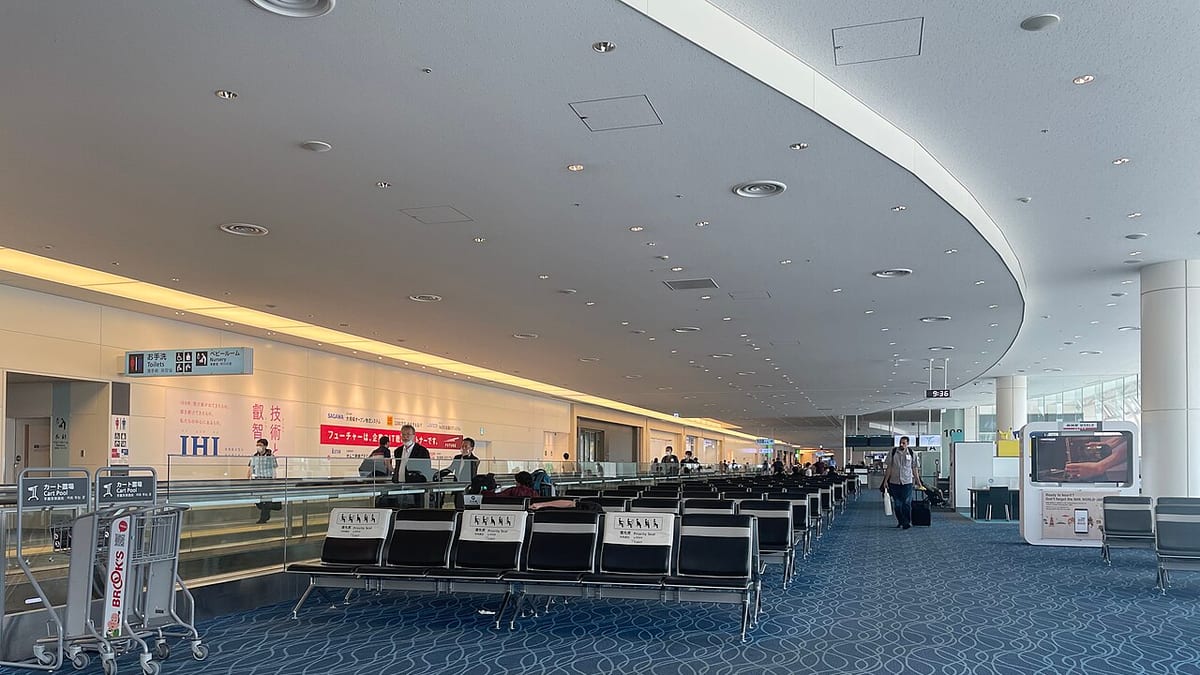
Terminal 3 is generally open around the clock, but the overnight-stay rule is limited to people who have used or intend to use international flights. Keep your itinerary available and follow staff instructions. A domestic-only traveler should not treat Terminal 3 as an automatically authorized free overnight solution. [1]
These are rules about access, not guarantees of a comfortable sleeping place. No public seating plan can promise you a vacant stretch of seats, quiet conditions or uninterrupted sleep. If missing rest would create a serious problem the next day, make a confirmed accommodation plan instead.
For an eligible traveler waiting in Terminal 3, choose a place that does not obstruct circulation, keep baggage controlled and leave enough time to move to the required departure area. Do not assume that being inside the terminal means all airline and security procedures are already complete.
Choose a hotel on the correct side of immigration
The airport's hotel directory lists First Cabin in Terminal 1, Haneda Excel Hotel Tokyu in Terminal 2, and The Royal Park Hotel Tokyo Haneda in Terminal 3. It separately lists The Royal Park Hotel Tokyo Haneda Transit inside Terminal 3's restricted departure area. [2]
That last distinction matters. The public-side Royal Park hotel and the transit hotel are not interchangeable reservations. A booking website offering an ordinary hotel room does not establish that you have booked the airside property.
Choose a public-side room when you are entering Japan or need access from the domestic side, subject to your own entry and travel arrangements. Choose an airside option only after verifying that your connection and documents meet its restrictions. A bed behind departure controls is not useful to someone who cannot lawfully or operationally reach it.
With a terminal change, plan the transfer separately. Being in a hotel "at Haneda" does not mean you can step directly from that room to every airline's counter. Use the flight's actual terminal, not a general assumption based on its airline or destination.
The transit hotel has a crucial check-in restriction
The Royal Park transit property identifies its entrance near international Gate 114 in Terminal 3. Its conditions cover eligible international connections within Terminal 3 and passengers who have completed the required departure procedures for a Terminal 3 international flight. It specifically excludes several other situations, including an international-to-domestic connection and a Terminal 3 arrival connecting to Terminal 2's international area. [3]
The operator also states that check-in is unavailable between 1am and 5am. This is a material exception to an airport directory's broad 24-hour hotel listing. Do not arrive at 2am assuming that a new check-in is possible because the building is listed as open all night. [3]
Confirm the exact arrival time, stay period and checkout conditions before paying, especially for a booking spanning those hours. The Japanese page also distinguishes rooms from refresh rooms; the latter have a sofa and shower rather than a bed. A refresh-room reservation is not a sleeping-room reservation. [3]
For someone departing from the public side, airline check-in opening is another constraint. A transit-hotel booking does not make the airline accept your baggage or issue access documents earlier than its procedures allow. Resolve that with the airline before reserving a long pre-flight stay.
First Cabin is not a family hotel room
First Cabin's Terminal 1 property offers individual cabins in separate men's and women's areas. The operator states that cabin doors cannot be locked as conventional hotel rooms and that sound can travel through the partitions. Lockable storage is provided, but the product should not be confused with a private soundproof bedroom. [4]
It also does not accept children aged 12 or younger. That makes it unsuitable as the default recommendation for a family with young children, even when the price appears attractive. Compare a conventional room that permits your whole party instead. [4]
There is a separate short-stay product. The operator lists two-hour starting rates of JPY 3,000 for a business-class cabin and JPY 4,000 for a first-class cabin, with short-stay reception ending at 9pm and final checkout at 11pm. Those are not published full-night rates. [4]
Use those details to compare like with like. A two-hour rest, a full overnight cabin booking and a hotel room for two adults purchase different amounts of time and privacy. For an overnight reservation, follow the actual plan's conditions and ask how to reach the property when terminal access is restricted.
Work backwards from the next flight
Calculate when you must be at the airline counter, security point or gate before deciding when to wake. The scheduled take-off time is not the time to leave your sleeping place. Add the walk and any terminal transfer to the airline's requirements.
For illustration, a six-hour interval between flights might leave far less than six hours for sleep once arrival procedures, hotel access and the next departure are included. Write those steps down rather than comparing only the arrival and departure clocks. The relevant question is how much continuous rest the booking creates.
Haneda's official rail guide identifies Keikyu and Tokyo Monorail as the airport's direct railway connections and refers travelers to their timetables. Neither a terminal's 24-hour opening nor a hotel's round-the-clock operation establishes an all-night train service. [5]
If a city hotel is an alternative, compare the real transfer available at your arrival hour and the return needed for the next flight. A low room rate can cease to be good value once two road transfers and a shortened sleep period are added.
Make public-area rest a fallback, not a promise
For an eligible Terminal 3 overnight wait, bring a layer, eye mask and a way to charge your phone. Secure documents and valuables, use an alarm and recheck the flight display when you wake. Do not leave belongings unattended to hold seats.
For a canceled or heavily delayed flight, contact the airline before buying accommodation and ask what support applies to your booking. Keep confirmations and receipts; do not assume that a self-selected hotel will automatically be reimbursed.
Haneda can accommodate an overnight connection, but the answer is not simply "sleep anywhere." Match the terminal rules to your itinerary, distinguish public-side and transit reservations, and verify the check-in window. Those choices are what turn an overnight airport wait into a workable rest plan.