The Tokyo Monorail is a good Haneda Airport transfer when Hamamatsucho or an onward JR connection suits your destination. It serves the airport's three terminal stations, but the final journey to your hotel still matters. Choose the route using your actual terminal and hotel entrance, not a general claim that one airport train is best for everyone. 1
Understand where the train takes you
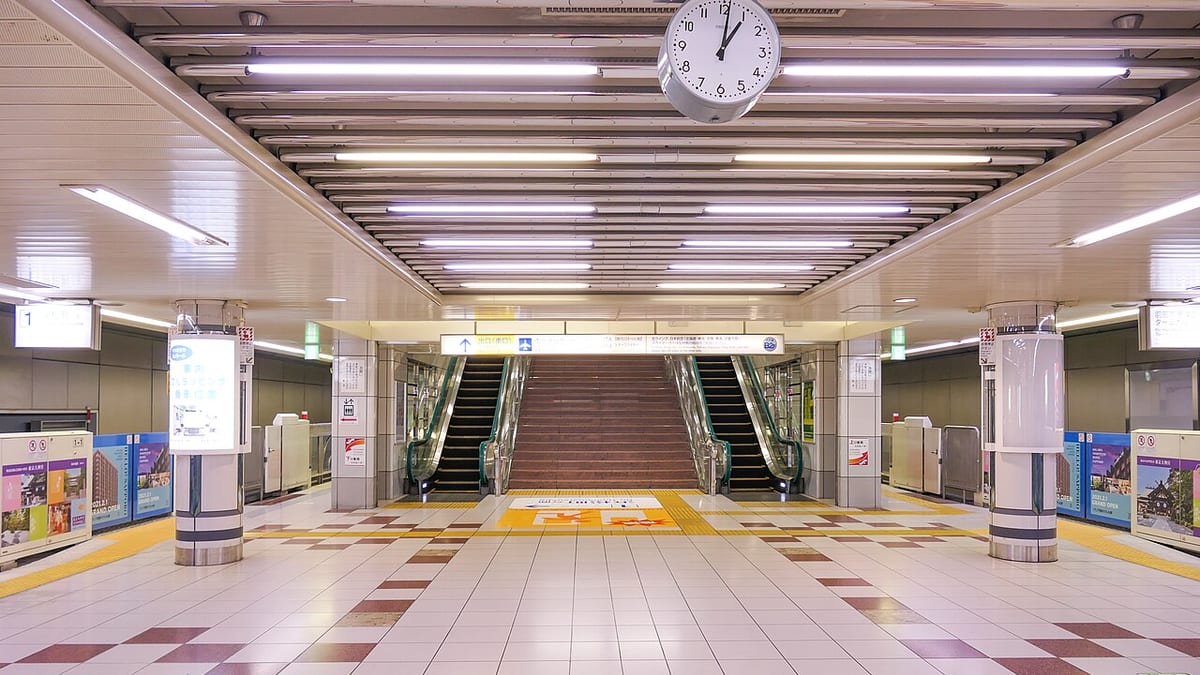
The city terminus is Monorail Hamamatsucho. From there, JR Hamamatsucho provides connections to the Yamanote and Keihin-Tohoku lines; nearby Daimon is a separate subway connection. Reaching the monorail terminus does not mean you have already reached Tokyo Station, Shinjuku or every central hotel. 1
At the airport, choose Haneda Airport Terminal 1, Terminal 2 or Terminal 3 station according to your flight. Do not assume your terminal from a broad label such as "international flight." Use the airline's confirmed terminal information and the airport signs.
For a citybound arrival, the sequence is arrival formalities, baggage collection when applicable, the station, the monorail and then any onward connection. A quoted train journey covers only one part of that sequence. It should not be presented as the time between landing and reaching your hotel.
The same logic applies in reverse. For departure, allow time for the trip to Hamamatsucho, the monorail, the correct terminal approach and your airline's pre-flight requirements. A tight connection built from train time alone leaves no allowance for ordinary station navigation.
Haneda Express, Rapid or Local?
The line uses different stopping patterns, including Haneda Express, Rapid and Local services. All serve the airport terminal stations; the difference is in intermediate stops. Follow the platform display for your destination rather than assuming that "Express" means a separately booked airport product. 1
The operator advertises a fastest journey of roughly 13 minutes between Terminal 3 and Hamamatsucho. That is useful for comparing the rail leg, but it is not a guaranteed door-to-door transfer time and should not be applied to every terminal or stopping pattern. 1
There are no reserved seats. A ticket pays for the journey rather than a particular seat, so a group should not plan on a guaranteed block of seats together. Keep luggage positioned so that other passengers can move and board. 2
For a destination at an intermediate station, check the stopping pattern before boarding. The fastest service to Hamamatsucho is not necessarily the right service for a hotel or meeting near a station it skips. That is a more useful distinction than choosing the train with the most impressive name.
Ordinary fares and payment
Between Hamamatsucho and any of the three airport terminal stations, the published adult fare is JPY 520 with a paper ticket or JPY 519 using an IC card. The corresponding child figures are JPY 260 and JPY 259. Onward JR or subway travel is separate unless you hold a product that specifically combines it. 3
Use a compatible Suica or other accepted IC card when it already has enough balance. Otherwise, buy the appropriate ordinary ticket at the station. The operator's FAQ says ordinary tickets cannot be purchased with a credit card, so keep yen available rather than assuming that every railway machine accepts foreign bank cards. 2
Do not extend Tokyo Metro's newer bank-card tapping arrangement to the monorail by assumption. Different operators publish different payment rules. A Suica balance loaded using a bank card in a phone wallet is also not the same process as presenting that bank card directly at a railway gate.
At entry and exit, use the same credential. When changing to JR, follow the connection signs and complete the relevant gate process rather than assuming you remain inside one operator's paid area. A familiar-looking IC reader does not mean that the second train is included in the first fare.
The eligible-day Yamanote connection ticket can be better value
The operator currently lists its Monorail and Yamanote Line Discount Ticket at JPY 590 for adults and JPY 290 for children. It combines one airport-to-city monorail trip with an eligible JR journey via Hamamatsucho, on specified sale and use dates. It is not an unlimited Yamanote day pass. 4
The published period includes weekends and national holidays from 14 March 2026 to 31 March 2027, plus specified additional dates. The ticket is sold only on the day of use at the airport terminal stations, and the permitted journey is in the airport-to-city direction. Do not assume an ordinary weekday or a return trip to Haneda qualifies. 4
Compared with the JPY 520 ordinary paper monorail fare, the JPY 590 ticket adds JPY 70 for its covered onward JR journey. That calculation makes it worth checking when your actual destination is eligible. It does not prove the ticket is useful for someone whose hotel is already at Hamamatsucho.
Follow the specific ticket instructions during the transfer: retain it through the Hamamatsucho connection and let it be collected at the final destination. Stopovers are not allowed, so exiting for lunch at an intermediate station is not part of the product. 4
The current JPY 590 listing is the basis for this guide. Older descriptions with a different price or an expired list of eligible dates should not override the operator's dated conditions. A small saving is useful only when the ticket actually matches your direction, date and destination.
Choosing between the monorail and another transfer
Compare the complete route from terminal to hotel. A monorail-plus-JR journey may be straightforward for one address but require awkward changes for another. Consider the final walking section and the luggage you will be managing, not only the first train's fare.
A direct road transfer can be worth the extra cost for a group with substantial bags or a hotel poorly placed for rail. Ask for the complete charge before comparing it with individual train fares. Conversely, a simple rail connection may be preferable to paying for a road journey whose main benefit is avoiding a short, manageable interchange.
For early departures or late arrivals, use the timetable for the exact airport station and direction. The monorail is not a 24-hour service, and the last useful connection may be earlier than the last train on the first line you take. Prepare an alternative when the flight timing leaves little margin.
A note for travellers buying Monorail Suica
A Monorail-issued Suica can be used across participating IC networks, but refunds are handled by the issuing operator rather than any station displaying a Suica symbol. That distinction matters when you plan to leave Japan through a different airport. Do not load a large balance on the assumption that every railway counter can refund it. 2
The best monorail plan is a simple one: confirm the terminal, choose a train that serves your stop, select the right ticket and understand the onward connection. Once those decisions are clear, the transfer becomes a usable part of the trip rather than a puzzle postponed until after a long flight.