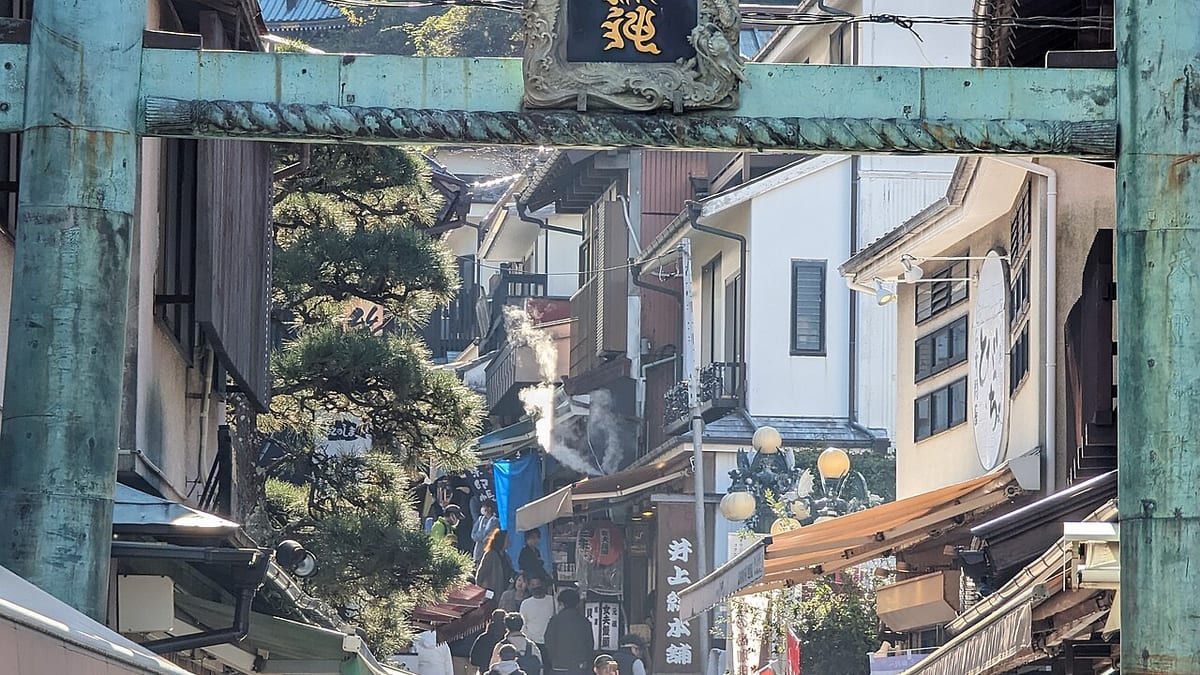
Enoshima is worth visiting from Tokyo when you want a coastal change of scenery with shrines, viewpoints and a substantial island walk. Give it a full day when you want the upper island and caves; choose a shorter version when walking limits or weather matter. It is not a flat beach excursion, and the escalators do not solve the return descent. 12
Choose Enoshima for the island, not just the train ride
The appeal is the combination of the approach across the water, the shrine route, the upper-island garden and tower, and the more rugged shore towards the caves. Kanagawa's tourism authority presents these as connected parts of an outing, not attractions that all sit beside the arrival station. 1
That makes Enoshima a good counterpoint to several days of central Tokyo. You can have a meal, walk between viewpoints and decide how far to continue without buying a major attraction ticket for every hour. It is less compelling when you simply want somewhere to sit on a beach and have no interest in the island's climbs.
Do not make a promised Mount Fuji view the reason the trip must succeed. Visibility depends on conditions. A clear-day photograph is useful inspiration, not a guarantee attached to a railway or observation-deck ticket.
My recommendation is to choose Enoshima on a day when you can leave the evening reasonably flexible. An early return is easy to make when the outing has been satisfying; a hard deadline in Tokyo can turn the far side of the island into somewhere you are anxious to leave.
Pick the route from your Tokyo base
Odakyu offers the Enoshima-Kamakura Freepass, currently JPY 1,640 from Shinjuku for an adult. Its core includes one return journey between the departure station and Fujisawa, plus unlimited travel in the designated local Odakyu section and on Enoden for the valid day. A Romancecar limited-express supplement is separate. 3
This can be a useful product when you intend to combine Enoshima with travel on Enoden. It does not follow that everyone should first travel to Shinjuku merely to buy it. Compare the journey from your hotel with alternatives using the stations and operators convenient to you.
For travellers starting on the eastern or southern side of Tokyo, a route through Fujisawa or Ofuna may make more sense than crossing the city to reach a particular advertised departure point. Kanagawa's official itinerary describes rail approaches through Fujisawa and the Shonan Monorail connection from Ofuna. Use a current journey planner for the actual departure time. 1
Keep the station names distinct. Katase-Enoshima, Enoshima and Shonan-Enoshima belong to different rail services and are not all the same platform. The final walk towards the island is part of the trip whichever route you choose.
A reserved seat can be worth paying for when comfort matters, but compare the full cost. A pass that covers the ordinary fare does not automatically include a limited-express seat. Similarly, buying a transport pass does not necessarily include the island's paid attractions.
The Escar is useful - but only uphill
The Escar consists of three escalator sections leading towards the upper island. The railway operators' visitor information lists JPY 500 for the full adult ascent. Its value is reducing part of the climb, not turning Enoshima into a completely step-free destination. 4
The facility operator is explicit: there is no downward Escar, and visitors return using stairs. This is the most important detail for someone with knee problems, limited stamina or a pushchair. Do not judge accessibility solely from a photograph of an escalator entrance. 2
Also distinguish reaching the upper island from continuing to the far-side caves. A ticket to an escalator does not eliminate every change of level on the broader route. Decide the turning point around the needs of the least comfortable walker, not the ambition of the person holding the map.
For a gentler day, concentrate on the approach, lower shrine area and a meal, then return without completing the far-side circuit. That is a legitimate Enoshima visit, not a failed version of the full island itinerary.
Choose attractions before buying a bundle
The Sea Candle observation tower and Iwaya caves are different experiences. The first is about the wider outlook; the second takes you into sea-eroded caves at the island's far end. Fujisawa's tourism authority lists ordinary Iwaya admission at JPY 500 for adults, with seasonal opening arrangements. 5
Do not arrive at the caves assuming the island's evening activity means they remain open late. The published general window is 09:00–17:00, subject to season and current operating information. Put an essential cave visit earlier in the plan rather than leaving it until after a long lunch and several other stops. 5
For the tower and escalators, the operators list a JPY 1,100 Sea Candle set ticket, compared with ordinary adult charges of JPY 800 for the tower and JPY 500 for the full Escar. On those published figures, the set saves JPY 200 when you actually want both. 4
That calculation does not make the bundle worthwhile for someone who only wants the escalator or only intends to walk around the lower island. Nor does a transport Freepass automatically include this attraction package. Keep railway coverage and island admission as separate parts of the budget.
The Samuel Cocking Garden also has event-related evening charging arrangements. A ticket that works for a daytime visit should not be assumed to cover every illumination period or late departure. Read the product's daytime or night-time inclusions rather than choosing solely from the largest advertised discount. 4
Enoshima alone or Enoshima plus Kamakura?
A combined day is possible, but the key is deciding which destination is the priority. The Enoshima-Kamakura Freepass makes local rail travel convenient; it does not create extra daylight or remove the time spent walking between attractions. 3
Choose an Enoshima-focused day when you want to climb, visit the caves, have an unhurried meal and enjoy the coast. Add Kamakura only as a limited second stop when you know exactly what you want there and accept that something on the island will be omitted.
Choose a Kamakura-focused day when temples and town streets are the main interest, with Enoshima as a shorter coastal addition. Trying to give both destinations their fullest possible itinerary often produces a day of departures rather than visits.
For families, one substantial paid attraction and one long outdoor section may be enough. Build a meal into the route before everyone becomes tired. A queue for a famous restaurant can consume the time you had reserved for the far side of the island; decide whether the meal or the additional walk matters more.
A realistic sequence for a first visit
Arrive with the route back to Tokyo already understood. Walk towards the island, then decide whether to use the Escar based on the day's energy and conditions. Give the shrine route and upper area enough attention before deciding whether to continue to Iwaya.
My suggested allowance is most of a day from Tokyo for the fuller version. That is an itinerary recommendation, not an official average or a claim that every visitor needs the same number of hours. A shorter lower-island outing can work, but it should be planned as such rather than treated as an accidentally unfinished circuit.
Keep weather-dependent activities optional and follow any closure notices around the coast. Do not rely on a boat connection as the only way back unless the operator has confirmed that service for your day and you have a workable alternative.
Enoshima is a strong day trip when you want the combination of movement, views and a change of pace. It is less suitable when the group needs an entirely flat route or when your Tokyo schedule leaves only a rushed half-day. Choose the version that matches the people travelling, and let the transport ticket support that choice rather than dictate it.