For sightseeing, ride the Tokyo Yamanote Line after 10:00 on weekdays and avoid the main commuting peaks when your schedule allows. Daylight is best for understanding the city from the windows; late evening is better treated as transport home. There is no universally quiet carriage or direction, so use current conditions rather than a rigid "secret" timetable. 12
The line is a working urban railway, not a sightseeing attraction with reserved viewing seats. Its advantage is that it connects places you may already want to explore. A few well-chosen journeys can reveal more than sitting through an entire circuit simply because the route forms a loop.
A practical time window, not a promise of empty trains
Japan's national tourism organisation recommends travelling after 10:00 on weekdays to avoid the morning commute. GO TOKYO describes the wider city's rush-hour periods as roughly 07:30–09:30 and 17:30–19:30, with mornings particularly demanding. Those are planning guides, not live crowd measurements for every Yamanote service. 12
For a first sightseeing ride, late morning through mid-afternoon is therefore a sensible starting window. Choose the exact departure around your destination's opening time and the journey you actually need. A quieter train is not useful if it delivers you to an attraction long before entry begins.
Early morning can suit a short trip to an outdoor destination, but distinguish an early leisure departure from the later commuter wave. Do not assume that "before lunch" is one consistent crowd category.
Weekends remove the ordinary weekday commute pattern, not all demand. Plan around the places you are visiting and any particular event rather than expecting every Saturday train to be empty. When a service looks uncomfortable, waiting for another is an option, not a guarantee that the next one will be quieter.
Use the app for a better decision at the platform
JR East's app provides crowding information for major Kanto services. Its published FAQ describes five crowding levels based on information from approximately five minutes earlier. That is more useful than an undated claim that the first carriage is always quiet, but it is not a live seat reservation or a prediction for the next station. 3
Use it to compare the available information while you are planning or waiting. Then look at the actual platform and approaching train. A recently comfortable carriage can fill, and an app indication should not override what you can see.
Keep the app's purpose separate from the English service-status page. The latter is useful for disruption information; it does not make a general promise about how crowded your carriage will be. Both can help, but they answer different questions. 34
For a family or someone with luggage, the useful decision may be to delay the journey, change the route or travel in a smaller group. Saving a few minutes is rarely worth making boarding unnecessarily stressful.
Choose a useful section rather than the longest ride
The Yamanote route serves 30 stations, according to JR East's own material. Think of those as a set of neighbourhood connections, not a checklist to finish. Pick a section linking two places already on your itinerary and use the ride to understand how they relate. 5
A western-side outing might combine Shinjuku, Harajuku and Shibuya, while an eastern-side outing can connect Ueno, Akihabara and Tokyo Station. Consult the current route map for the order and direction. The editorial aim is to reduce backtracking, not claim that one side provides a continuous postcard view. 6
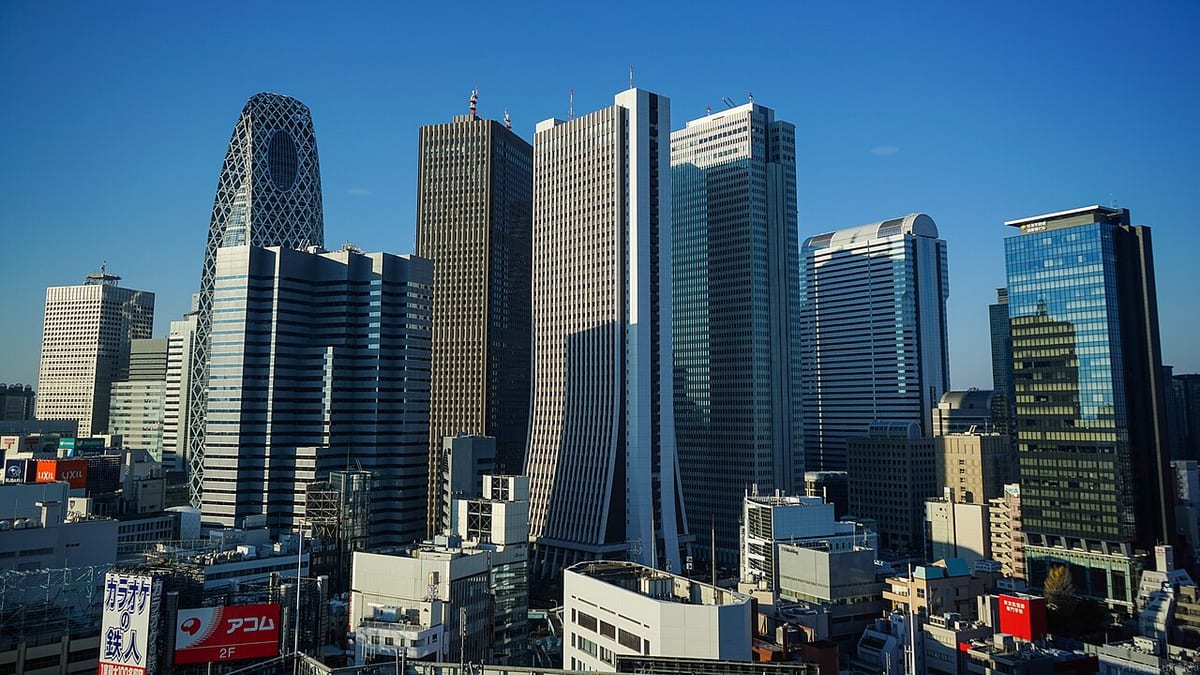
Travel in daylight when you want to notice the changing urban scale. After dark, lit buildings can be interesting, but reflections and the absence of wider detail create a different experience. Choose the timing for what you want to see rather than assuming evening automatically improves every view.
Do not lean across another passenger or monopolise a doorway for a photograph. A seat is not guaranteed, and the ability to see out is not an entitlement to block normal movement. When the train is busy, save the sightseeing attention for the next walk.
Direction matters less than the next station on the sign
A loop can make "inbound" and "outbound" explanations feel unnecessarily abstract. Look for the destination and upcoming major stations shown on the platform, then confirm that they match the shorter direction for your journey. JR East's network map is a better starting point than memorising a clockwise rule without checking your origin. 6
When you realise you boarded the longer way around, compare the remaining journey before automatically changing. The aim is to reach the destination comfortably, not to perform a perfect route.
The Yamanote Line is also not always the quickest answer merely because it connects both neighbourhoods. A route across the centre may be more direct than travelling around the edge. Use the complete route search, including transfers and walking, rather than choosing a line for its familiarity. 67
For a ride that returns to the same station, ask station staff which ticket and fare are appropriate before boarding. Do not assume that a circular journey becomes free because the entry and exit names match, or that a short-distance ticket automatically covers any sightseeing circuit.
Tickets and luggage can change the best time
Suica is convenient for ordinary journeys because it deducts the applicable fare, but it is not an unlimited sightseeing pass. Equally, a Tokyo Subway Ticket covers Tokyo Metro and Toei Subway, not the JR Yamanote Line. A visitor who chooses a hotel for Yamanote access should include those JR fares in the budget. 89
An expensive regional pass should not be bought simply to avoid small city fares. Compare the journeys actually planned, especially when most days involve walking within one neighbourhood. The convenience of a familiar card and the value of an unlimited pass are separate questions.
With a suitcase, prioritise the journey rather than the view. Keep luggage close, allow extra time to find the correct lift and platform, and avoid using a busy train as an improvised tour between hotels. Storing bags first may turn the same afternoon into a much more pleasant outing.
For the last journey of the evening, use the timetable for the exact station, direction and date. "The trains run late" is not enough information to protect a dinner or concert plan. A late connection can determine the whole return route even when the first train is still operating. 46
A better first ride
Start with a weekday journey after the morning peak, choose a section between two planned stops, and travel light. Use JR East's current information when crowding or disruption could change the plan. Then get off and explore: the line is most valuable as a way to connect the city, not as an obligation to remain on board.
There is no need to hunt for a perfect minute. A realistic route, a flexible departure and an ordinary level of consideration for other passengers will improve the experience more reliably than an unsupported promise of an empty train.
Sources
- Japan National Tourism Organization - avoiding Tokyo crowds
- GO TOKYO - using the subway and rush-hour guidance
- JR East - app crowding-information FAQ
- JR East - Kanto train service information
- JR East - Yamanote Quest and thirty stations
- JR East: maps, station numbering and railway networks
- Tokyo Metro: route and station information
- JR East - Suica types
- Tokyo Metro - visitor subway tickets